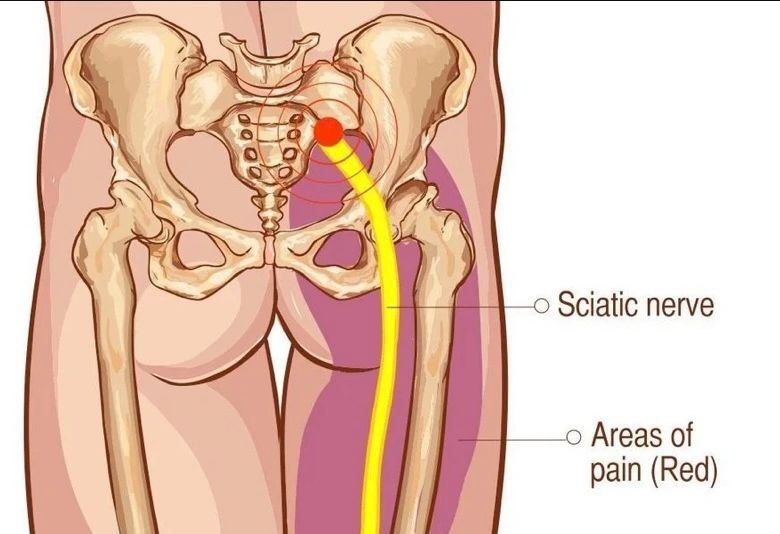
Sciatic Nerve Neuralgia (sciatica) results from irritation or compression of the L4-S3 spinal nerves by a herniated disc, spondylolisthesis, tensed low back muscles, by a hyperactive piriformis muscle, or by a combination of factors. Pain originates in the low back and gluteal muscles and can be felt all the way down to the toes. Pain may radiate to the groin and hip joint. Because of the location of the nerve, other visceral symptoms, such as constipation or impotence, may also be present. In many cases, the low back and hip are pain-free, and pain is only felt in the thigh, leg or foot.
The severity of symptoms depends upon the amount of pressure around the sciatic nerve. If the nerve is actually being compressed by a herniated disc, the symptoms will be constant and severe. However, often the nerve is not physically compressed, but rather “crowded” by tight muscles and increased pressure within the space it is meant to glide. This can create pain that comes and goes or is less severe than with a disc herniation. Pain may be felt in one area of distribution of the nerve, such as the outside of the lower leg or in the back of the leg.
When pain is felt only in the low back and gluteal muscles, it is not considered sciatica, as the sciatic nerve does not innervate these areas. When pain is primarily felt in the buttocks, the low back is typically tight and responsible for irritation of the nerves that innervate the gluteal muscles, causing tension and pain to develop in those areas. Left untreated, there is potential for sciatica to develop.
Unless your sciatica is caused by a herniated disc or other compression at the level of the spine, medical massage can be highly effective at eliminating your pain. The goal is to eliminate any pressure on the sciatic nerve created by tight low back and posterior hip muscles and to eliminate tension built up in the thigh and leg.